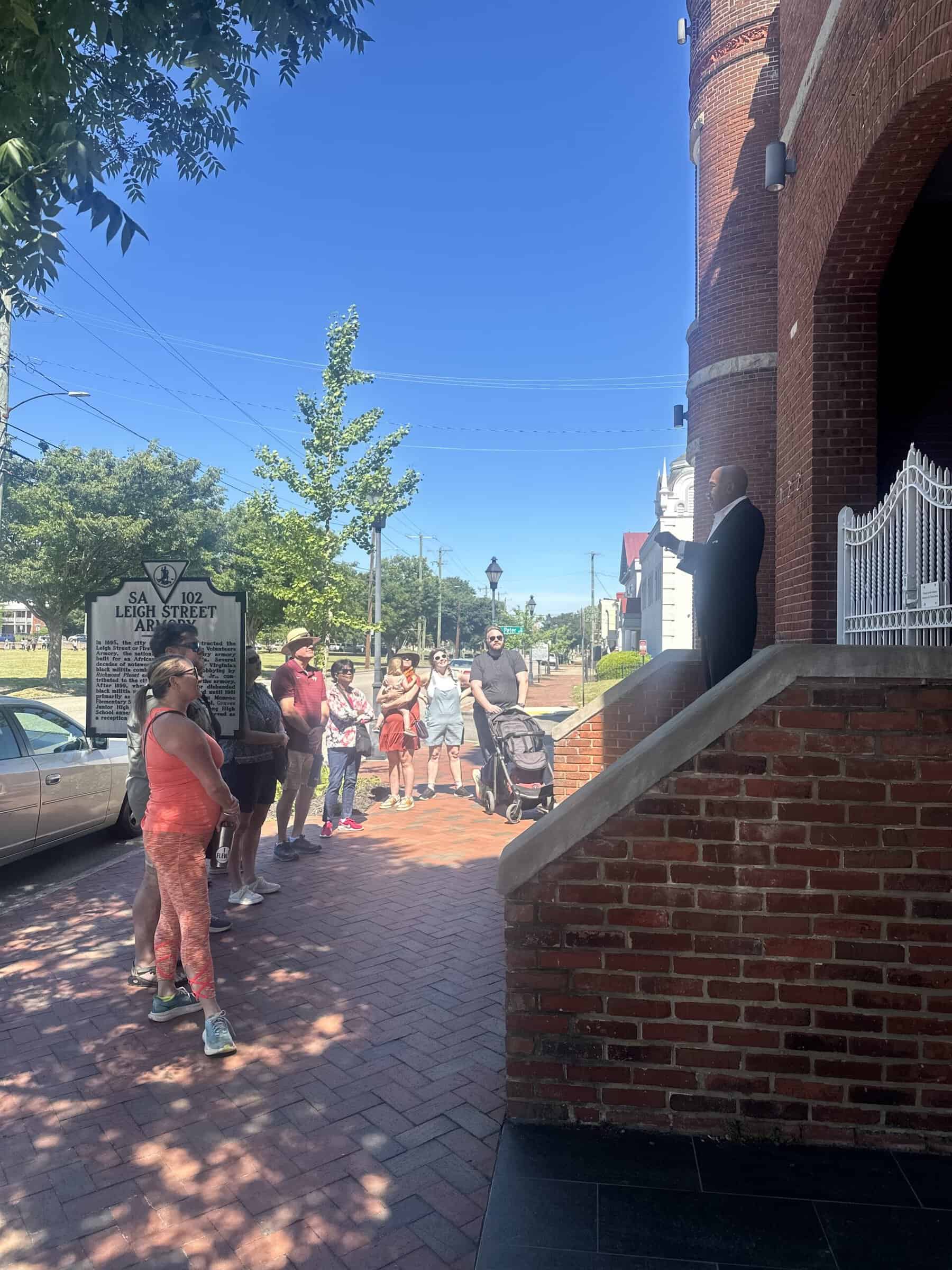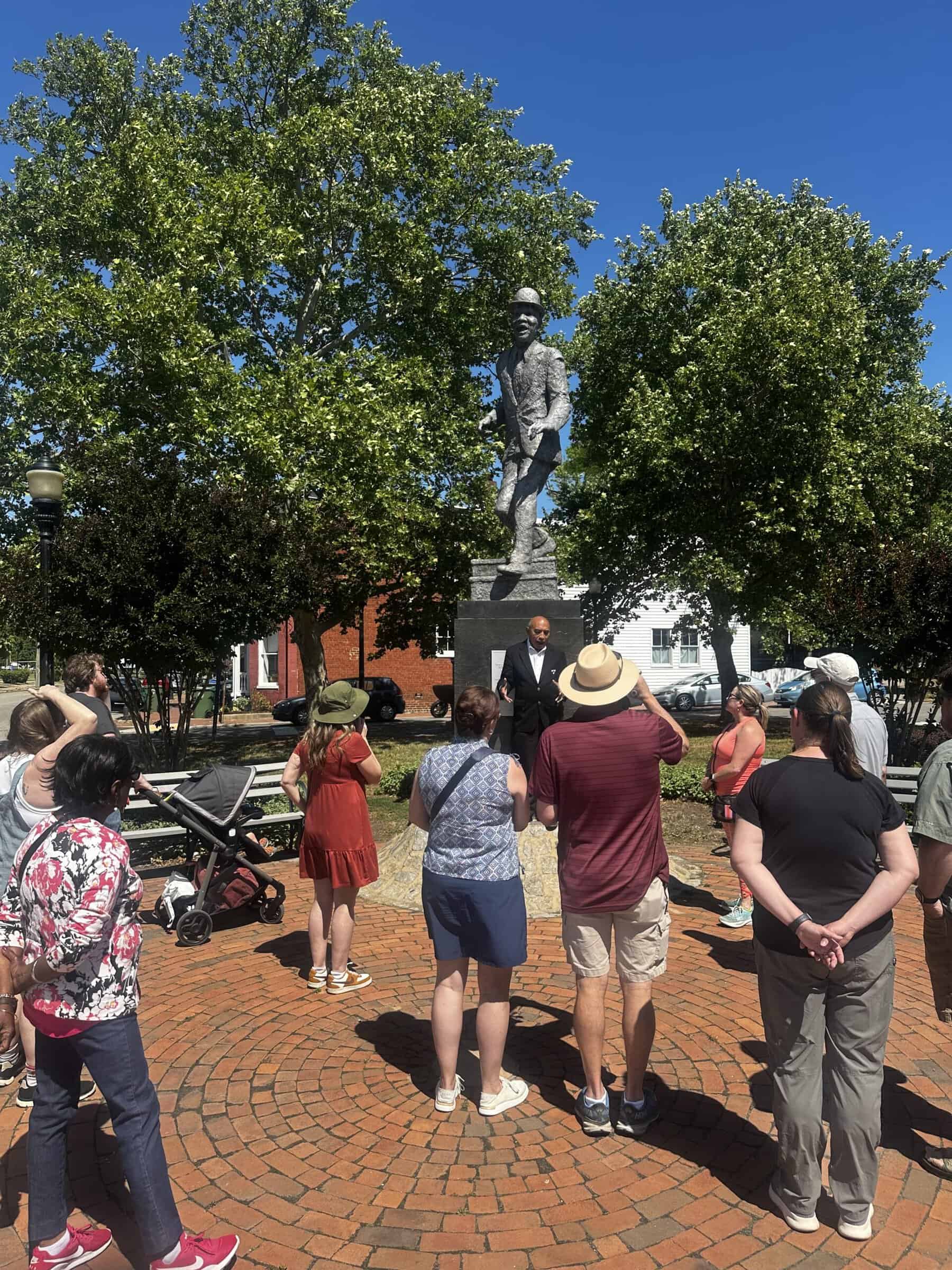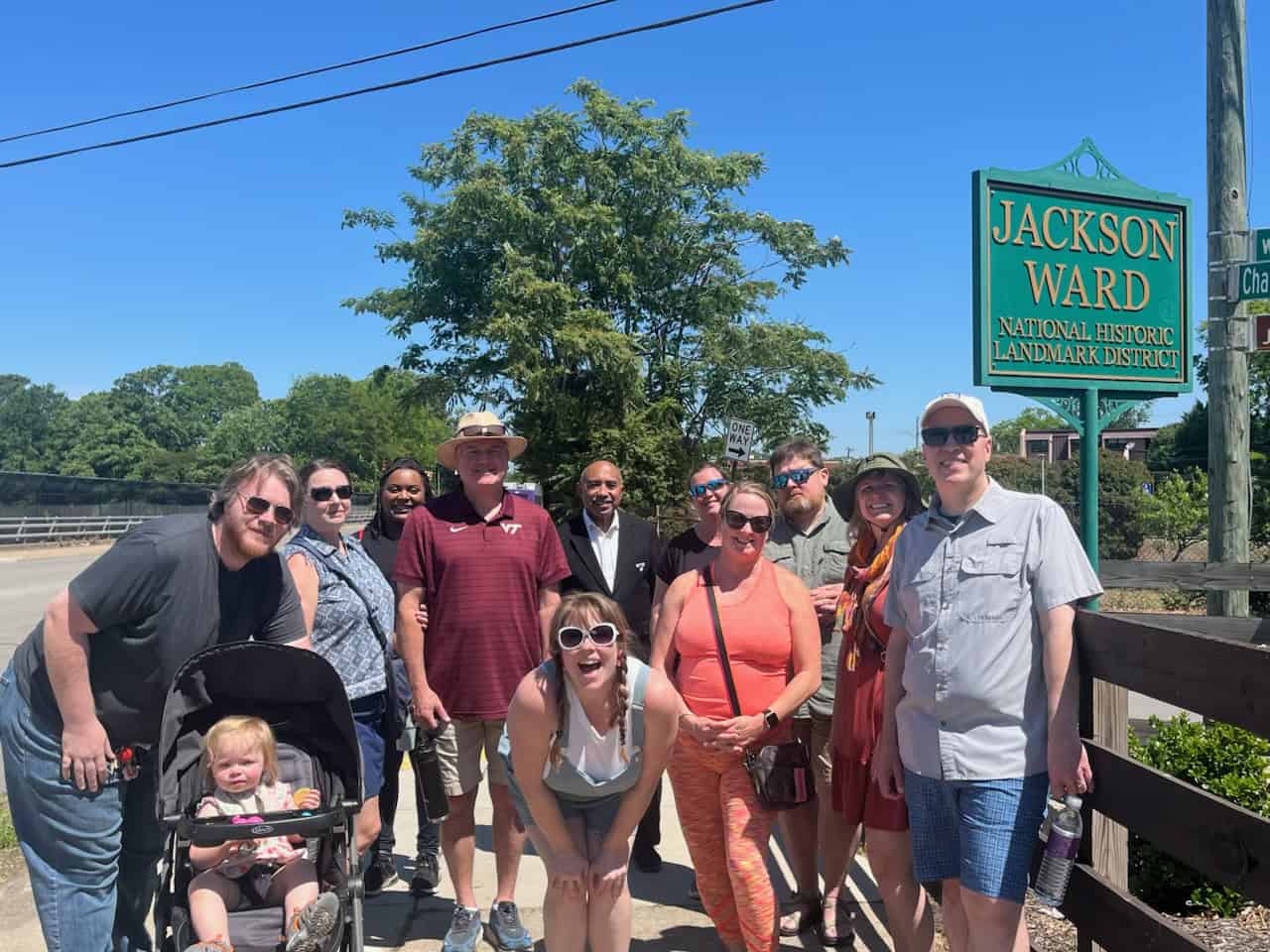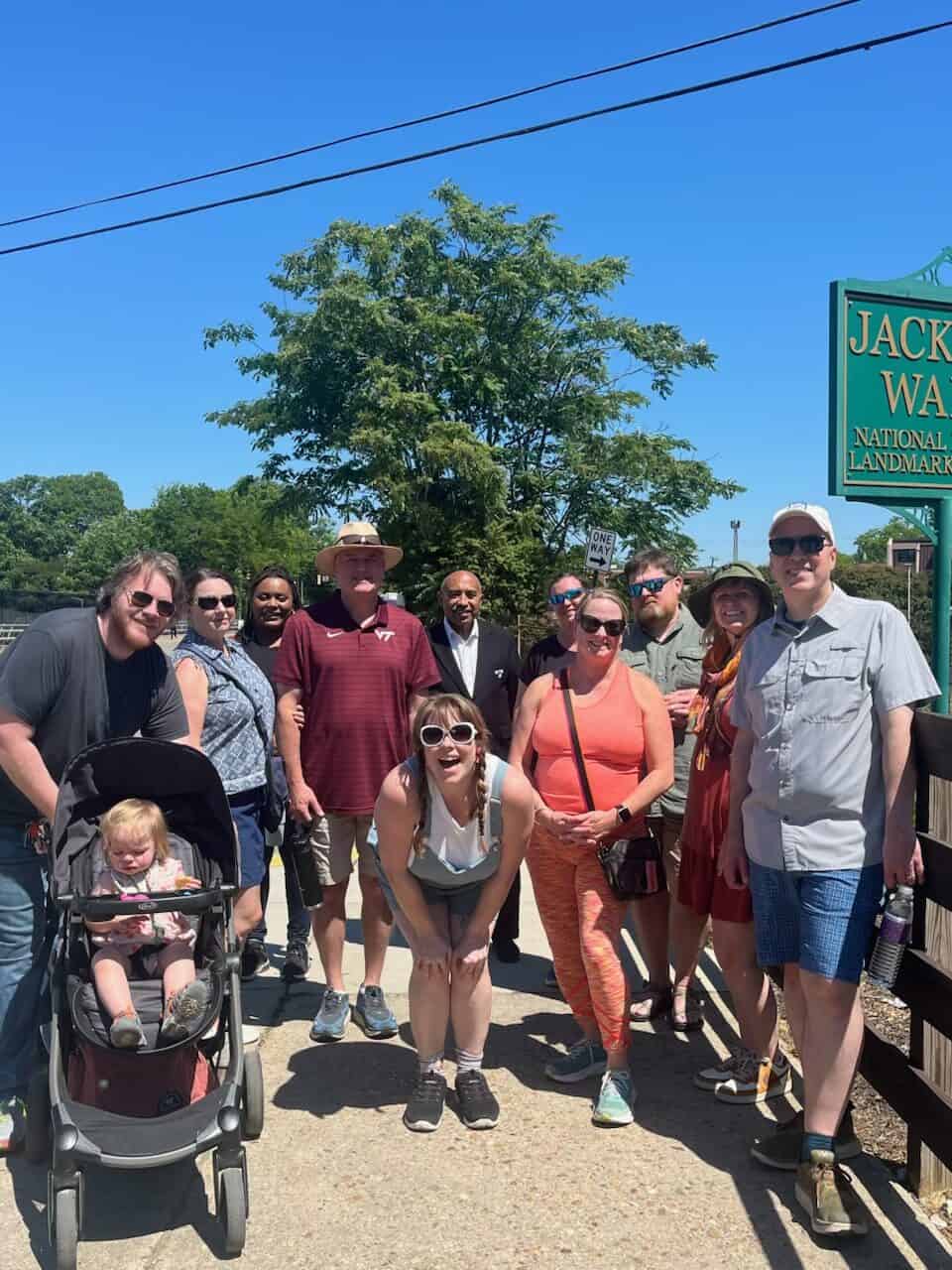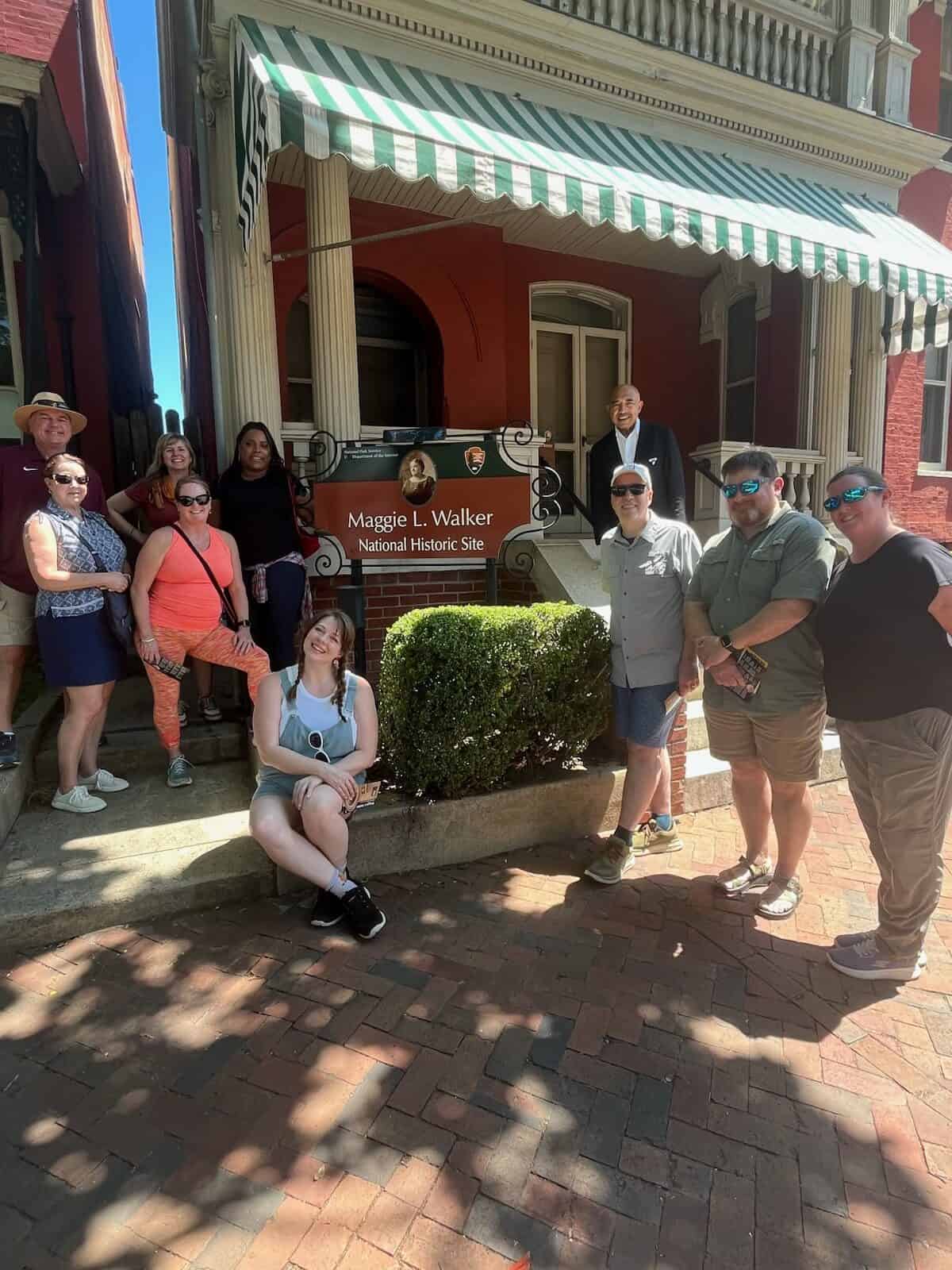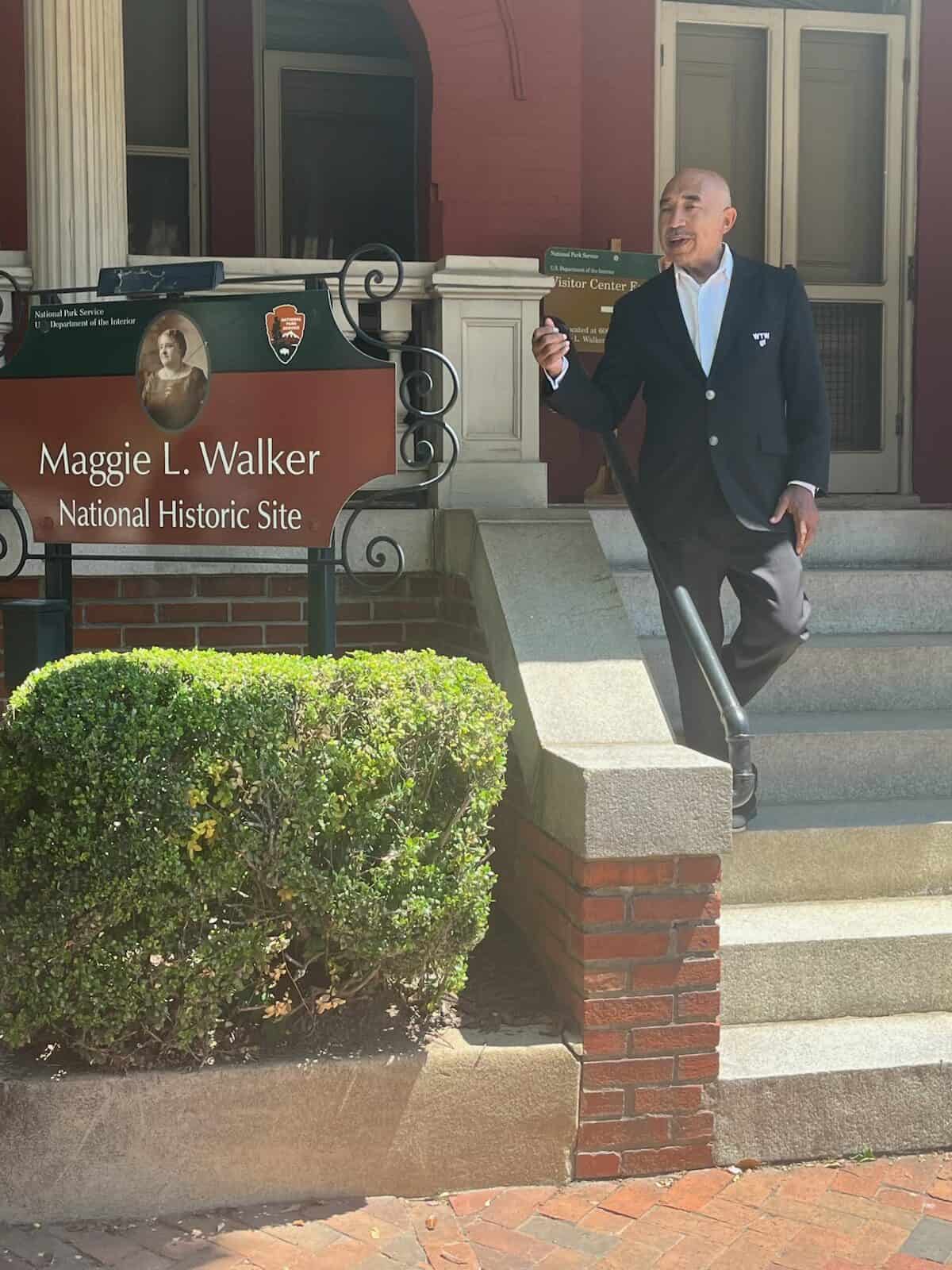
This past weekend members of the VA Rep Staff and Board joined Gary L. Flowers, a fifteen generation Virginian, and a fourth-generation Jackson Ward resident, to “Walk the Ward”! Gary provides 20-stop walking tours of Historic Jackson Ward in the downtown section of Richmond, Virginia. Tours include historic educational, economic, religious, and social institutions that inspired the name, “Black Wall Street, and “The Harlem of the South”, and served as an early model of Black Capitalism in the United States of America.
During this incredible hour and a half tour our staff learned a lot about the history of the neighborhood VA Rep calls home. Our walking tour through Jackson Ward explored the deep history of race, resistance, Black institution-building, and cultural legacy in both Richmond and the broader story of America. We began by discussing the early foundations of the transatlantic slave trade dating back to 1442 and examined how race and systems of inequality were intentionally created and reinforced through law and society over time. Referencing works such as In the Matter of Color by A. Leon Higginbotham Jr. and The History of White People by Nell Irvin Painter, the tour connected these ideas to major moments in Virginia history, including the 1669 Casual Killing Act and the aftermath of Bacon’s Rebellion, which helped solidify racial divisions and the legal concept of “whiteness” in colonial America.
We explored the themes of resilience and self-determination found in Richmond’s Black community after emancipation. We discussed the importance of mutual aid societies, the impact of the Dovell Act of 1935, and the ways Black communities created systems of support during segregation and economic hardship. A major focus was William Washington Browne and the founding of the True Reformers Bank in 1888, recognized as the first Black-owned bank in American history and a symbol of the economic power that earned Jackson Ward the title “Black Wall Street of the South.”
The name Jackson Ward comes from Richmond’s post–Civil War political ward system. In the late 19th century, the area was named after President Andrew Jackson, but the deeper story of the ward’s creation is tied to race and voter suppression during Reconstruction and the years that followed. The boundaries of the community are North: Interstate 95 (I-95), South: E. Broad Street, East: 3rd Street, West: Belvidere Street.
Along the route, we learned about other important sites connected to Black education and cultural history, including the Skipwith Cottage, the home of Rosa Dixon Bowser (and the location of Richmond’s first Black public library) and the historic former Armstrong High School building on West Leigh Street. The tour also highlighted how Richmond’s arts community continues preserving this history today through projects like the upcoming Firehouse Theatre production about the life of John Mitchell Jr.
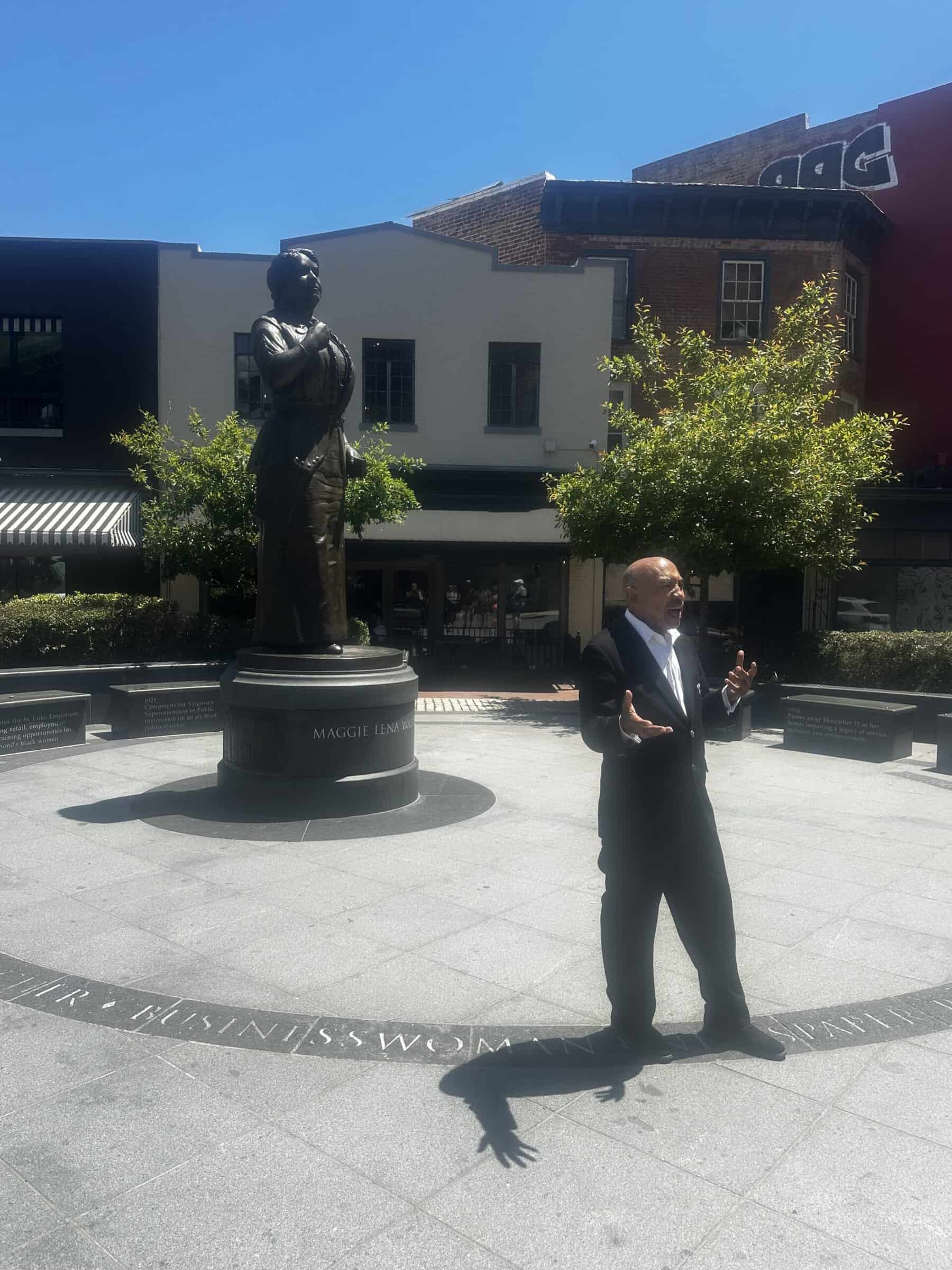
The tour concluded at the statue of Maggie Lena Walker at Broad and Adams Streets. Born in Richmond in 1864 to a formerly enslaved mother, Mrs. Walker became the first woman in the United States to charter and lead a bank through the St. Luke Penny Savings Bank. Through her leadership of the Independent Order of St. Luke, she championed Black homeownership, entrepreneurship, education, and mutual aid during segregation. Positioned at a major entrance to Jackson Ward, her statue stands as a powerful reminder of Black leadership, achievement, and the indomitable heart of “The Ward’s” sense of community.
A huge thank you to Gary L. Flowers for the tour and our Manager of Community and Board Relations, Jessi Johnson Peterson, for setting this experience up! Learn more about these tours and book one for your group here.
For more information on VA Rep’s tour contact